


Featured sites FreeSamples.co.uk PetrolPrices.co.uk Cupcakes.co.uk OwnBoss.co.uk
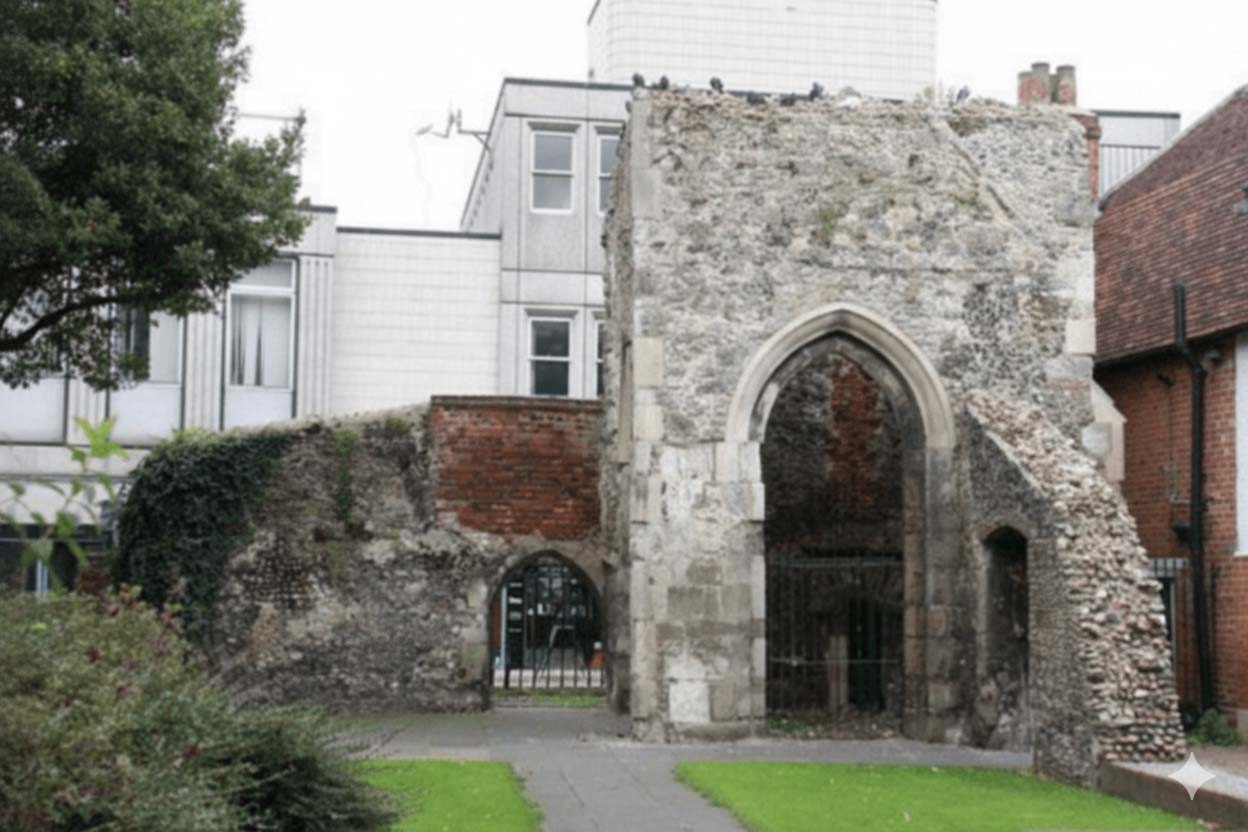
The ruins of St Thomas Becket Chapel in Brentwood
Brentwood through the ages

The history of Brentwood

From a clearing in the Great Forest of Essex to a pilgrim stop, coaching town, railway hub and thriving modern community.

  • 12th-century origins
  • Royal market charter, 1221
  • Railway arrived, 1840
Our town's story

A place shaped by journeys

Brentwood grew because people passed through it. Pilgrims, traders, coach passengers, soldiers and railway commuters each left their mark on the town, turning a woodland settlement beside an ancient road into the Brentwood we know today.

The route between London and Colchester gave Brentwood an importance beyond its size. Across more than eight centuries, transport, trade and community life repeatedly reshaped the town while historic landmarks kept its earliest stories visible.

12th C.

Origins: a clearing in the forest

The story of Brentwood begins in the vast Great Forest of Essex. Its name is believed to derive from the Old English words bærnet and wudu, meaning “burnt wood”. This refers to a settlement that grew within a clearing created by fire, likely established by the Abbot of St Osyth in the late 12th century.

Situated strategically on the old Roman road connecting London to Colchester, the small clearing was perfectly placed to become a useful stopping point for travellers and trade.
1170–1221

The age of pilgrimage

Brentwood’s importance grew in the medieval period following the martyrdom of St Thomas Becket in Canterbury in 1170. The town became a popular resting place for pilgrims travelling from East Anglia and beyond to his shrine.

In 1221, the Abbot of St Osyth obtained a royal charter to hold a market and fair, and a chapel dedicated to St Thomas was built. The atmospheric ruins of this 13th-century chapel can still be visited today—a powerful reminder of the thousands of pilgrims who passed through the town.

16th–18th C.

Coaching inns and market growth

As the centuries passed, Brentwood evolved into a prosperous coaching town. The High Street, lined with inns and alehouses, bustled with horse-drawn carriages carrying mail, goods and passengers between London and the east coast.

Famous inns such as the White Hart became landmarks, offering food, lodging and fresh horses for the next stage of the journey. The weekly market thrived, making Brentwood a commercial centre for the surrounding agricultural communities.

19th C.

The Victorian transformation

The 19th century brought profound changes. The arrival of the Eastern Counties Railway in 1840 connected Brentwood directly to London and marked the beginning of its life as a commuter town. Wealthy city merchants built grand villas, the population grew rapidly and major institutions shaped the area.

  • Warley Barracks: Built in 1805 amid fears of a Napoleonic invasion, it became the depot of the Essex Regiment and played a major role in military life for more than 150 years. The site was later redeveloped, while the chapel remains.
  • Warley Hospital: Opened in 1853 as the Essex County Lunatic Asylum, this vast Victorian complex became a major employer and a self-sufficient community with farms, a church and gasworks. It closed in 2001 and was converted into homes.
20th C.–today

Brentwood in the modern era

Throughout the 20th century, Brentwood continued to expand as an important part of the London commuter belt. It played its part during both World Wars, and the post-war years brought significant housing development. In 1993, Brentwood was granted Borough status, reflecting its civic importance.

Today, Brentwood is a vibrant modern town that has not forgotten its past. The Elizabeth line has strengthened its transport connections, while the historic High Street, ancient woodlands and surviving architecture offer direct links to the pilgrims, coachmen and Victorians who shaped its story.

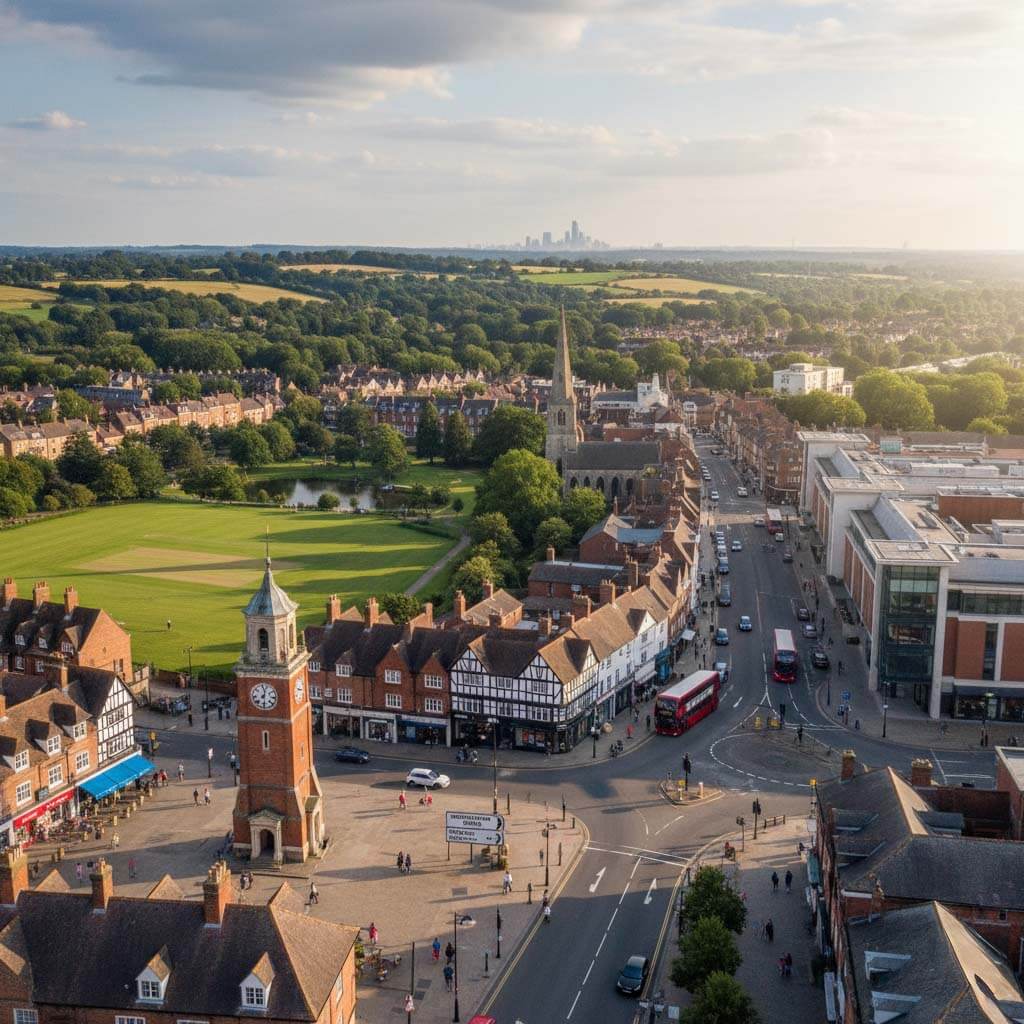
Aerial view across Brentwood and the surrounding Essex countryside
Past and present

A town still shaped by its route

Brentwood’s position between London and the Essex countryside has influenced its story for centuries. The old road brought pilgrims, coaches and trade; today, road and rail connections continue to shape the town and its community.

Explore Brentwood today